
Photograph
by Andrea Lucia Foresta – courtesy Iuav

Venice:
Iuav University – Is Italy Trendy? - 24H Marathon. To coin Renzo Rosso’s
company name OTB, which stands for, Only the Brave - could the dynamic, Maria
Luisa Frisa curator, fashion historian, author and director of the degree
program in Fashion/Design at the Universita Iuav di Venezia organize a 24H
marathon devoted to Fashion; words, images, projects and ideas on the Italian Fashion System,
entitled, Is Italy Trendy. The event was
mostly held in the Great Hall of the beautiful ex-convent, designed in the sixteenth
century by Vincenzo Scamozzi, now headquarters to Iuav. Together with Maria
Luisa Frisa the talks were co-hosted by Federico Sarica, director of Studio
magazine. The non-stop event alternated fashion designers, journalists,
writers, industrialists, bloggers, CEOs, presidents, scholars, curators who
expressed themselves in different formats. It was a
platform for reflection and discussion of the Italian Fashion System: as it is
today, and what it has to become to be unparalleled, in a world where politics,
commitment, responsibility, beauty and economy intertwine to occupy the territories of shared growth.
Above. Maria Luisa Frisa with the founder of Diesel and
president of OTB, Renzo Rosso and with the dean of Iuav Universita di Venezia,
Amerigo Restucci.

Is
Italy Trendy – Talks
Be creative! Do it With Your Head. Instructions for Success.
Co host with Maria Luisa Frisa, Federico Sarica, editor in
chief of Studio magazine and co founder of Undici interviews Renzo Rosso, founder of Diesel and president of OTB.

Is
Italy Trendy – Talks
Manufacturing,
Craftsmanship, Co-Design: A Choice of the Future
Chaired
- Clara Tosi Pamphili
Viaindustria, Happy Fashion’s Emanuele De Donno, Simone
Sbarbati Frizzifrizzi blogger, Clara Tosi Pamphili, fashion and costume
historian, Flash Art and Artribune contributor and Corrado Facco, managing
director of Fiera di Vicenza and founder of Origin - Passion and Beliefs.

Is
Italy Trendy – Talks
Good
News: New Italian Fashion
Chaired
- Gianluca Cantaro
L’Officiel Italia, L’Officiel
Hommes Hommes magazine’s editor in chief Gianluca Cantaro takes a selfie with
designers Fabio Quaranta and Arthur Arbesser, as Maria Luisa Frisa introduces
them.

Selfie
by Gianluca Cantaro
Fabio
Quaranta, Gianluca Cantaro and Arthur Arbesser

Is
Italy Trendy – Talks
Printed Paper, Web, Social Platforms: the New Forms of Publishing
Chaired - Cristiano Seganfreddo
Frizzifrizzi blogger, Simone Sbarbati, innovator and
creative entrepreneur, Cristiano Seganfreddo, L’Officiel Italia’s editor in
chief, Gianluca Cantaro, Sabrina Ciofi editor in chief of Pizza magazine and co
founder of Italiana Marchi, Andrea Battilla CEO of Italiana Marchi and Federico
Sarica editor in chief of Studio magazine and co founder of Undici.

Designer
Monica Bolzoni

Iuav's
Elda Danese with designer Raffaella Brunzin

Designer
Silvia Bisconti

Designer
Fabio Quaranta


Universita Iuav di Venezia – Tolentini. The entrance to the Tolentini campus of the Universita
Iuav di Venezia was restructured in the 1980s by architect Carlo Scarpa, The complex
which contains the ex-Convent of the Tolentini Church designedin the sixteenth century, by Vincenzo
Scamozzi it is also the seat of rector’s office, the Faculty
of Architecture and a Central Library.

Manager of Instagramers Venezia and co-founder
and editorial director of the web magazine Venezia da Vivere, Lorenzo Cinotti
with Giada Pavan.

Breakfast in the Courtyard

Breakfast
in the courtyard
Aristortele
come fare filosofia col cucchiaio
The
Manifesto of the Communist Pastry Chef
The early morning breakfast was catered by Aristortele come
fare filosofia col cucchiaio: the pastry chef Maddalena Borsato and the young
philosopher Jacopo Giacomoni who together create clever, amusing, humorous intellectual
philosophical takes on traditional pastries. Artistortole is a play on words –
philosopher Artistole and tortele meaning cakes in Italian.
Recipe
Raspberry
and Ginger Marx-mallows
People: the whole working class.
Preparation Time: 30 minutes of your time and only your
time (not the master’s). Plus, a night’s rest.
Ingredients: 200g caster sugar - 100g unfiltered
raspberry pulp - 170g honey - 20g gelatine -
20g grated fresh ginger - icing sugar - starch
Preparation:
In a saucepan bring to boil, at 108 degrees C., 50g of raspberry pulp with the sugar and 70g of the honey. In the meantime, whisk the rest of the pulp and honey together with the grated ginger, and gently drizzle it in the boiling syrup, until it reaches 35 degrees C. and it becomes a frothy and beautiful Communist pink. Pour the Marx-mallow in a shallow roasting pan, previously covered with foil and greased with vegetable oil or spray. Let it stand overnight at room temperature, even though… if the Revolution never sleeps!
Then turn the mixture out on a cutting board, cut into pretty shapes and dust the Marx-mallows on each side with equal amounts of icing sugar and starch.
Preparation:
In a saucepan bring to boil, at 108 degrees C., 50g of raspberry pulp with the sugar and 70g of the honey. In the meantime, whisk the rest of the pulp and honey together with the grated ginger, and gently drizzle it in the boiling syrup, until it reaches 35 degrees C. and it becomes a frothy and beautiful Communist pink. Pour the Marx-mallow in a shallow roasting pan, previously covered with foil and greased with vegetable oil or spray. Let it stand overnight at room temperature, even though… if the Revolution never sleeps!
Then turn the mixture out on a cutting board, cut into pretty shapes and dust the Marx-mallows on each side with equal amounts of icing sugar and starch.
becomes a frothy and beautiful Communist pink.
Snoopy’s Woodstock is a great expert of marshmallows!
http://www.aristortele.it/
http://www.aristortele.it/

Artistortele’s
pastry chef Maddalena Borsato and philosopher Jacopo Giacomoni


Aristortele
come fare filosofia col cucchiaio
Philosopher’s
Scones and Jams

Goppion
Coffee

Designer
and creative director of Ungaro, Fausto Puglisi, designer Lorenzo Serafini and journalist
Angelo Falccavento

Archive superintendent for Veneto and Trentino - Alto Adige regions,
Erilde Terenzoni and professor of Contemporary Art History at Parma University,
Gloria Bianchino.

Frizzifrizzi
blogger, Simone Sbarbati and Paola Severini Melograni, writer and TV producer

Adriano
Franchi managing director AltaRoma

Andrea
Battilla CEO of Italiana Marchi and Andrea Montorio,
CEO
Promemoria and Kollectium

Is
Italy Trendy – Talks
Fashion
and Italian Museums: a difficult
relationship
Chaired - Serena Tibaldi
Clara Tosi Pamphili, Flash Art and Artribune contributor, Alessandra
Mammi art historian and journalist, Maria Luisa Frisa and Serena Tibaldi
fashion editor D La Repubblica.

Carlo Magnani director of the Department of Architecture and Arts at Universita Iuav di Venezia and Elisa Gagliardi Mangilli art historian and
Orientalist at Udine University.
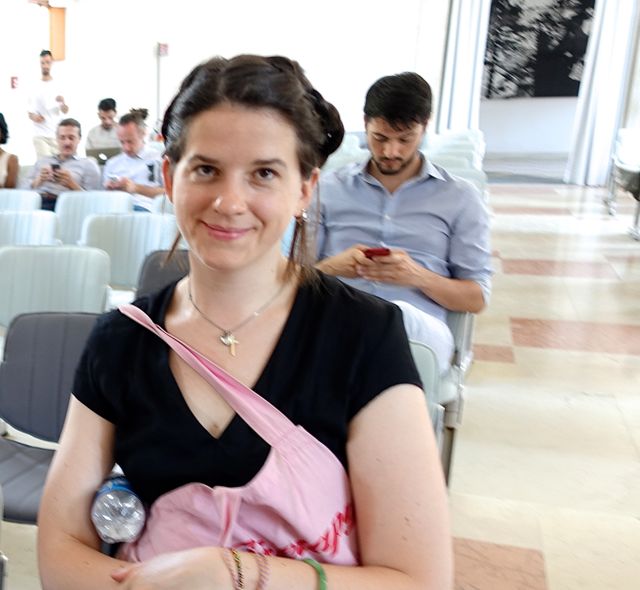
Designer
Onka Allmayer-Beck

Is
Italy Trendy – Conclusions
Andrea Tomat, president Lotto Sport Italia SpA, Alberto
Baban, president of Piccola industria and V.P. Confindustria, Cristiano
Seganfreddo, innovator and creative entrepreneur and Carlo Magnani director of
the Department of Architecture and Arts Universita Iuav di Venezia.
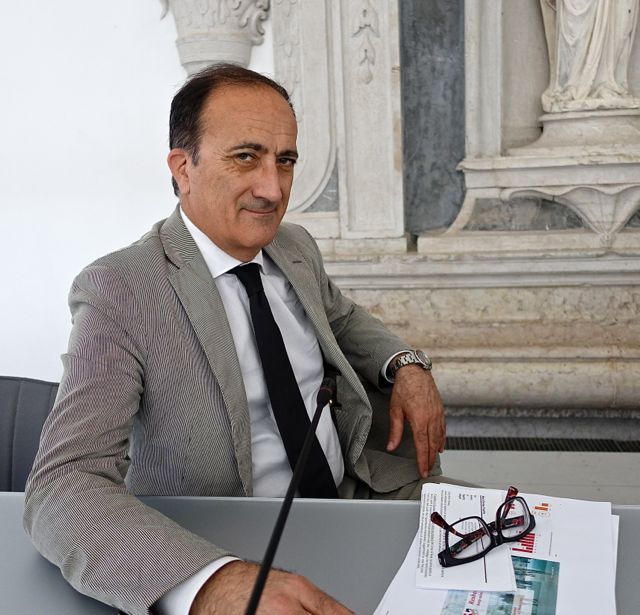
Andrea
Tomat, president Lotto Sport Italia SpA

Alma
and Maja Spinelli, Maria and Vjera Bonifacic

Sara
Maino, senior editor Vogue Italia and editor Vogue Talents and Lupo Lanzara, general
manager at the Accademia Costume e Moda.

Last
BUT not Least - Iuav’s Gabriele Monti


